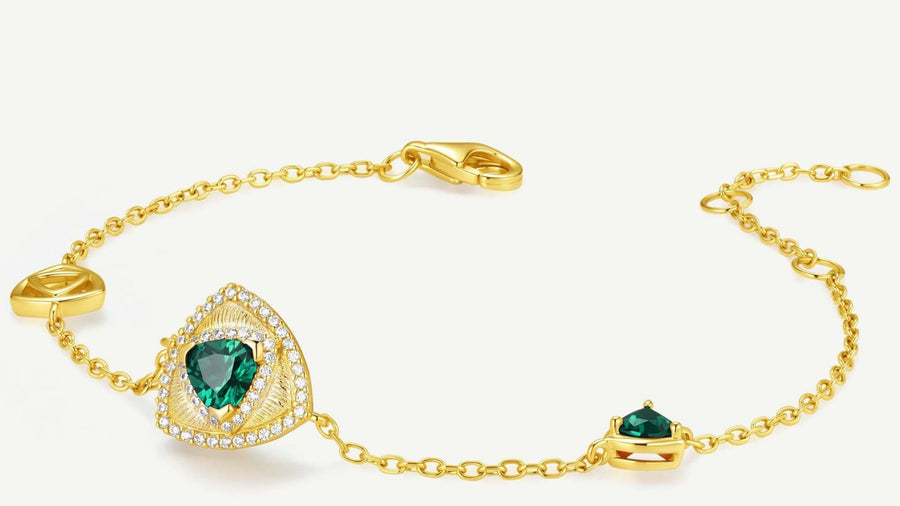
An emerald cut tennis bracelet favors long clean lines, and a 20 inch tennis necklace sits low on the collarbone. Cut shape and length shape the look more than carat weight.
Key Takeaways
The essentials at a glance:
- An emerald cut is a step cut with long rectangular facets that return broad, even flashes of light.
- Straight edges line up edge to edge, so a tennis row reads as one continuous ribbon rather than scattered points.
- Step cuts show clarity and color clearly, so a cleaner stone matters more here than on a brilliant cut.
- A 20 inch tennis necklace drops below the collarbone and clears crew necks and higher necklines.
- Check the product page for the exact material before choosing a metal finish for daily wear.
What an Emerald Cut Actually Shows
An emerald cut is a step cut built from long rectangular facets rather than the small triangular facets of a brilliant cut. Instead of scattering light into a busy sparkle, it returns broad, even flashes that read almost like a hall of mirrors. The shape is usually rectangular with trimmed corners, and those straight edges give the stone a calm, architectural look. That is why the same cut appears on both colorless diamonds and colored gems, and why it feels quieter than a round brilliant of similar size.
The cut takes its name from the emerald, because step facets were first used to protect that softer gem and show off its deep green without losing too much weight. The GIA guide to emeralds covers the stone that gave the shape its name, and the GIA guide to diamonds explains how cut style changes the way light moves through a colorless stone. Knowing that history helps you read what the cut is doing: it is showing clarity and color, not chasing the most sparkle possible.
Because step cuts reveal so much of the stone, clarity matters more here than on a brilliant cut. Inclusions that a busy facet pattern would hide can sit in plain sight against the long open facets, and uneven color shows up just as easily. This is not a flaw in the shape, just a trade off to plan for. If you want the crispest look, favor a cleaner stone and accept a slightly smaller size rather than the other way around. The cubic zirconia vs diamond article compares how different materials handle that clarity question.
Why the Cut Suits a Tennis Row
A tennis row lines stones edge to edge, and the straight sides of a step cut let that line read as one clean ribbon instead of a string of separate points. Round brilliant stones break a row into a scatter of highlights, while rectangular step cuts share a common edge and keep the eye moving along the wrist or the neck. The result is a piece that looks deliberate and even from a distance, which is exactly what a continuous line of stones wants.
Uniformity is the quiet reason this pairing works so well. A tennis setting repeats the same link dozens of times, so any difference in stone shape or size repeats too, and the row starts to look wavy. Step cut stones are easy to match because their outline is simple, and a matched set makes the whole piece read as one object. Uniformity also matters for durability, since a well matched row sits flat and spreads small knocks across many settings instead of loading them onto one. The GIA gemstone reference explains why hardness and structure matter for pieces built from many small stones.
You can see the same logic on both a bracelet and a necklace. The tennis necklace collection shows the linked structure carried around the neck, and the full tennis collection lets you compare the row across different stone shapes before choosing. The tennis bracelet everyday looks article walks through how a linked row behaves through a normal week of wear. If you already like the clean lines of a step cut, the tennis setting is one of the few places where that shape gets to repeat at full length.

Where a 20 Inch Tennis Necklace Sits
A 20 inch tennis necklace drops below the collarbone onto the upper chest, which is longer than the common 16 or 18 inch lengths. That extra drop gives the row a wider arc, so the stones spread out instead of crowding into a tight curve near the throat. It also clears crew necks and higher necklines, which is why a slightly longer tennis row often works better with everyday clothes than a short one that fights the collar.
Length also decides how the piece layers. A 20 inch row leaves room for a shorter pendant above it, and that gap is what keeps a layered look from turning into a tangle. The necklace chain length guide covers where the standard lengths fall on different necklines, while the layer necklaces with chains article shows how to space two or three pieces so they stay separate. If you plan to add a birthstone pendant on top, the GIA guide to birthstones lays out the month by month chart to build the pair around.
Color reads differently at this length too. Pale stones such as aquamarine keep an even, quiet tone across a wide arc, and the GIA guide to aquamarine covers why that cool blue stays so consistent from stone to stone. A longer row gives each gem a little more space to be seen, which suits step cuts especially well because their open facets show color rather than hiding it behind sparkle. Hold the necklace against the shirt you wear most often before you decide, since a 20 inch drop changes with the neckline.

Match Metal, Clarity, and Care
Step cuts reveal more of a stone than brilliant cuts do, so clarity and metal choice deserve as much attention as the shape. A cleaner stone keeps the long facets crisp, while a busy or included stone can look cloudy in an open step cut. Metal sets the frame around that clarity: a cool tone sharpens the blue in aquamarine, and a warm tone softens it. Rather than guess at karats or finishes, check the product page for the exact material, because gold colored and silver colored pieces are built differently.
Skin sensitivity is worth a quick check before you buy, since a tennis row puts a long stretch of metal against the neck or wrist. The sensitive skin metals check walks through the common finishes, and the silver tennis jewelry collection is a useful place to see one tone carried across a full linked row. If a piece will be worn daily, a finish that suits your skin matters more than a small difference in shine. Cleaning should follow the same logic as the stone, and the birthstone cleaning at home guide explains how to clear a linked row without soaking a delicate setting.
Colored stones add one more variable. A deep blue sapphire hides small inclusions more easily than a pale stone, and the GIA guide to sapphires covers how color depth changes what you see through an open facet. Whatever stone you pick, store a tennis row flat so the links do not kink, and fasten the clasp before putting it away. A row that lies flat keeps its even line, and that even line is the whole point of choosing a step cut in the first place.
Frequently Asked Questions About Emerald Cut Tennis Jewelry
Q1: What makes an emerald cut different from a brilliant cut?
An emerald cut uses long rectangular step facets, while a brilliant cut uses many small triangular facets. The step cut returns broad, even flashes of light and shows off clarity and color, where a brilliant cut aims for maximum sparkle. The straight edges also make step cut stones easy to line up in a tennis row.
Q2: Does a 20 inch tennis necklace suit everyday wear?
Yes, for most people. A 20 inch drop sits below the collarbone and clears crew necks and higher necklines, which makes it easier to wear with casual clothes than a short 16 inch row. It also leaves room above it for a shorter pendant if you like a layered look.
Q3: Do step cut stones need higher clarity?
They generally benefit from it. Long open facets show inclusions and uneven color that a busy brilliant pattern would hide, so a cleaner stone keeps the crisp look the cut is known for. Favor clarity over a slightly larger size if the two are in conflict, and the piece will read well from a distance.
Q4: Can I wear a tennis bracelet and a tennis necklace together?
You can, and the repeating shape makes the pair feel intentional. Keep the rest of the jewelry quiet so the two rows lead the look, and check each product page for the exact material if you have reactive skin. Matching the stone color ties the set together without needing identical pieces.
Q5: How do I clean a step cut tennis row?
Use a soft cloth and mild soap, and avoid soaking a delicate setting for long. The birthstone cleaning at home guide covers a linked row in more detail. Store the piece flat with the clasp fastened so the links keep their even line between wears.