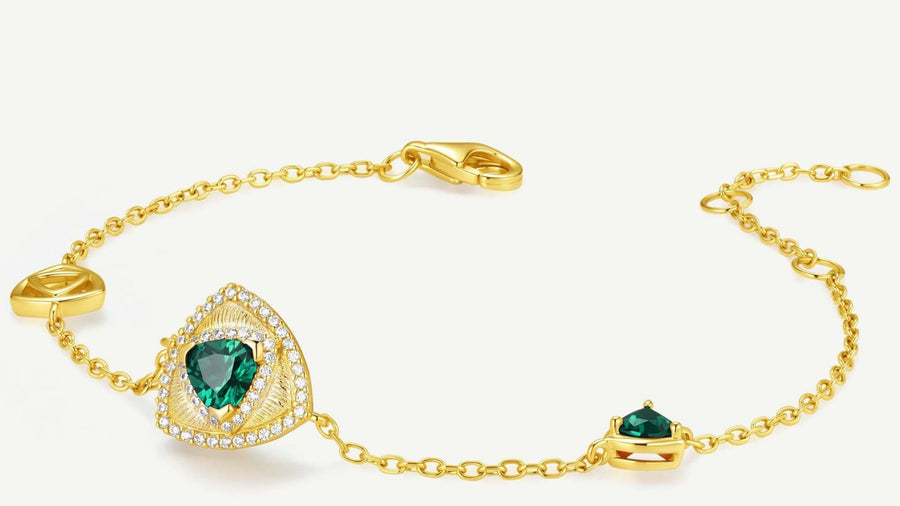
Birthstone promise rings pair a vow with two birth months, so the ring stands for both a decision and the two people who made it. The usual approach sets one stone for each partner, side by side or split across matching bands. A matching pendant carries the same idea on a chain when a ring is not the right fit.
Key Takeaways
The essentials at a glance:
- A promise ring marks a commitment, and adding birthstones ties that commitment to two specific people.
- Two stones can share one band, sit in a matched pair of rings, or hang from paired pendants.
- Pick the care routine based on the softer of the two stones if the piece is worn every day.
- A pendant suits partners who skip rings or want a lower cost option with the same meaning.
- Check the product page for the exact metal, since gold tone styles can be plated.
A Promise and a Birthstone Tell Two Kinds of Story
A promise ring and a birthstone carry two different kinds of meaning, and putting them together covers both. The ring itself says that a commitment exists, whether that means exclusivity, a future plan, or a shared decision to wait. The stones say whose commitment it is. Without them, the band is a general symbol; with them, it points to two particular birth months and two particular people.
That combination is why these rings work well before an engagement, or instead of one. An engagement ring signals a specific next step, while a promise ring leaves the timeline open. Adding birthstones makes the piece feel chosen rather than borrowed from a standard case, which matters when the gift is meant to be personal but not yet formal. The promise rings collection shows the range of band shapes that suit a two stone layout, from slim plain bands to styles with a small side setting.
Most couples keep the design quiet. A low profile band with two modest stones reads as an everyday ring rather than a statement piece, and that is usually the point. The promise necklace meaning guide covers the same idea in pendant form if one partner prefers a chain. Before you settle on a size, the how to choose a promise ring page walks through fit, width, and how a band should feel on a hand that wears it daily. A ring that is comfortable on a Tuesday is the one that stays on.

Choose How Two Stones Share One Setting
Two birthstones can live together in three workable layouts. The first is a single band with two stones set side by side, which keeps the whole story in one place. The second is a matched pair of rings, one stone per person, so each partner wears the other's month. The third uses one main stone with the second as a small side accent. All three read clearly, and the right choice depends on how openly you want the piece to show.
Side by side settings look best when the stones share a cut and a size. Two different months often bring two different colors, and a shared round or princess cut keeps the pair from looking mismatched. The GIA gemstone reference explains how cut and proportion change the way a stone sits in a setting, which is worth reading before you match unlike materials. The GIA guide to birthstones lists the traditional stone for each month if you want to confirm the two you are choosing. If the months happen to be close in color, a small difference in tone can be enough to tell them apart.
The matched pair option solves a practical problem. Some people dislike a wide band or want a ring that stacks with others, and two slim rings are easier to wear than one double stone setting. Each ring also stays meaningful on its own, so the pair still works when the two of you are apart. The birthstone jewelry collection gathers the month stones that fill these bands, and the birthstone rings collection shows how a single stone sits in a narrow setting. Ask whether the two bands can be sized independently, since hands rarely match exactly.
Couples Pendants Carry the Same Idea on a Chain
A couples birthstone pendant moves the two month idea to a chain, which suits anyone who does not wear rings. This is the most flexible version of the gift. One pendant can hold both stones, or two separate pendants can be worn as a pair, with each person carrying the other's month. The meaning stays the same while the form changes to fit a daily routine that has no place for a band.
Chain length decides how the pendant sits, and it is worth choosing before you order. A shorter chain keeps the piece near the collarbone and works under an open collar, while a longer one drops over a sweater and reads more casually. The GIA June birthstones page is a useful example of how one month can offer more than one stone, which gives you room to match a partner's color without leaving the birthstone framework. For deeper hues, the GIA guide to sapphires describes a family of stones that holds up well in a pendant worn often.
Paired pendants also let each person pick a chain that suits them. One partner may want a fine cable chain and the other a slightly heavier one, and the shared stones still make the set obvious. The couple jewelry symbols guide covers other matched designs if you want to compare, and the matching necklaces collection shows how paired pieces are sized and finished. If you are torn between a ring and a chain, the promise ring vs promise necklace comparison lays out the trade offs in plain terms.

Pick a Metal and Stone That Fit Daily Wear
Base the care routine on the softer of the two stones, because a piece like this is meant to stay on. A promise ring or pendant sees desk edges, hand washing, and sleeve cuffs every day, so hardness matters more here than it does for a piece worn on special occasions. Diamond takes that kind of use with ease, while pearl and opal need a gentler hand. The GIA guide to diamonds explains where the hardest option sits on the scale, and the GIA guide to pearls covers why softer stones call for a milder cleaning routine. If the two months differ a lot in hardness, wipe the whole piece with a dry cloth instead of soaking it.
Metal choice deserves the same attention. A band worn daily picks up small scuffs, and a finish that holds up under that use is worth asking about. Gold tone styles can be plated, so check the product page for the exact material before you buy rather than assuming the whole piece is one metal. The anniversary jewelry symbols guide is helpful if you are weighing a modest first piece against a more expensive upgrade later, since many couples treat the promise ring as the earlier chapter of a longer story.
Sizing and small details round out the decision. Leave a little room in the fit if the ring will be worn through warm weather, and ask whether an engraving can be added to the inside of the band without weakening it. Store a pendant flat and close its clasp before putting it away, so the chain does not knot. These are small habits, but they are what keep a piece that is worn every day looking like the day it was given.
Frequently Asked Questions About Birthstone Promise Rings
Q1: What does a birthstone promise ring mean?
It stands for a commitment between two people, with each stone marking one person's birth month. The ring itself signals the promise, and the stones make it specific to the couple. It is a personal symbol rather than a formal step like an engagement.
Q2: Can two different birthstones sit in one ring?
Yes. The common layouts are two stones side by side, a matched pair of rings with one stone each, or one main stone with a smaller side accent. A shared cut keeps unlike colors looking deliberate.
Q3: Is a couples birthstone pendant the same as a promise ring?
The meaning is the same, but the form is different. A pendant hangs on a chain and suits people who do not wear rings. Many couples pick the pendant so both partners can choose a chain length that works for them.
Q4: Which stone is best for a ring worn every day?
Diamond is the hardest choice and handles daily wear well, followed by sapphire and ruby. Pearl and opal need more care. Choose the cleaning routine based on the softer stone in the pair, not the harder one.
Q5: Can a promise ring be resized later?
Often yes, but it depends on the band and the setting. A plain band resizes more easily than one with stones around the full circle. Ask about sizing before you buy if you expect your ring size to change.