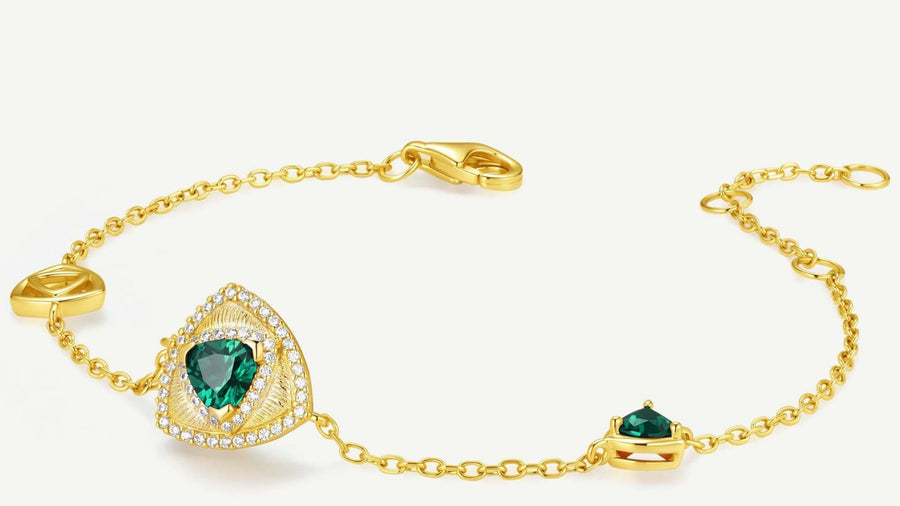
The right birthstone ring jewelry comes from balancing three choices: the metal, the stone, and the band. Get those three to agree with how you live, and the ring stays comfortable and meaningful for years.
Key Takeaways
The essentials at a glance:
- The metal sets the tone, the stone sets the color, and the band shapes how the ring feels on the hand.
- Harder stones such as sapphire and diamond handle daily wear, while softer stones need a protective setting.
- A slim band suits stacking, and a wider plain band keeps the focus on a single gem.
- Check the product page for the exact material, since finishes vary from one design to the next.
Start With the Metal That Fits Your Routine
Choose the metal first, because it sets the color of the whole ring and the amount of care the piece needs.
Gold tone reads warm and pairs well with earthy stones such as garnet and citrine. Silver tone reads cool and lets blue and violet stones stand out. Rose tone sits between the two and flatters soft pink stones. If you are building a set of ladies birthstone rings, keeping one metal across the group makes the rings look intentional when worn together. Neutral skin tones carry all three, while warmer skin often favors yellow tones and cooler skin favors white tones.
Daily wear narrows the choice further. A ring you never take off meets soap, water, and desk edges, so the finish matters more than the shine on day one. For sensitive skin, the metals for sensitive skin guide covers which alloys tend to cause trouble and which stay quiet. If a metal has ever left a mark on your finger, start there before you fall for a color.
Finishes vary from one design to the next, so check the product page for the exact material before you order. A listing that looks gold in a photo may use a plated finish, so read the material line carefully because plated and solid pieces age differently. The birthstone rings collection groups the styles in one place, which makes it easier to compare metals side by side before you settle on one.
Pick a Stone That Matches How Often You Wear It
Let the wear schedule pick the stone, because hardness decides whether a ring survives daily use or needs gentle handling.
The GIA gemstone reference groups stones by hardness, and the GIA guide to diamonds shows why diamond sits at the top of that scale. Sapphire and ruby follow close behind, which is why they suit a ring worn every day. The GIA guide to sapphires covers the blue family in detail, and the GIA April birthstones page shows the month most often linked to diamond.
Softer stones need more thought. Pearl, opal, and turquoise scratch or absorb moisture more easily, so a raised setting exposes them to knocks. The GIA guide to pearls outlines care for the delicate end of the scale, and the GIA guide to birthstones lists each month's options so you can see where your month falls. If the stone is soft, a bezel that wraps the edge is safer than a tall prong.
Color is the other half of the choice. Birthstone rings for women often get picked for a birth month first and a favorite color second, and the two do not always agree. June offers pearl, alexandrite, and moonstone in one month, so the palette is wide. The birthstone meanings by month guide walks through each option, which helps when the month color is not the shade you had in mind.

Match the Band to the Stone and Your Hand
The band controls comfort, so match its width to the stone size and to the shape of your hand.
A wide band balances a large center stone and feels steady on a longer finger. A slim band suits a small stone and leaves room beside other rings. Birthstone band rings take this further by setting small stones along the band itself, which spreads color around the finger instead of stacking it in one spot. That even row reads as a pattern from a distance and works well when you want more than one birth month on a single ring.
Think about the profile too. A flat, low band slides under gloves and does not catch on knit sleeves, while a raised or domed band catches light but snags more often. If you type all day, a low profile is the kinder choice. The how to choose birthstone rings guide covers fit details such as width and profile in plain terms, which is useful before you commit to a size.
Proportion beats trend. A 3 millimeter stone on a 2 millimeter band looks balanced, while the same stone on a 6 millimeter band can look lost. Narrow fingers usually carry slim bands better, and wider fingers can take a heavier band without the ring looking crowded. Try the ring next to a watch or a plain band you already own, since that is how it will actually sit on your hand.
Plan for Sizing, Care, and Future Stacking
Buy for the hand you have now and the set you may build later, because sizing and care are easier to plan up front than to fix.
Ring size shifts with temperature, time of day, and activity, so measure a finger at room temperature and more than once. A band that slides over the knuckle and sits snug at the base is right. If you plan to stack, buy the same size across the group, since a half size difference makes the set twist. Compare stone cuts in the gemstones collection, which is a handy place to see how each one sits in a similar band.
Care depends on the softest stone in the ring. Hardness still shapes the routine, and the birthstone jewelry cleaning guide covers gentle cleaning at home. Warm water, mild soap, and a soft cloth handle most pieces. Skip ultrasonic cleaners for softer stones, and take the ring off before swimming or heavy lifting.
A ring built to grow starts simpler than one meant to stay fixed. If you expect to add birth months later, pick a plain low band and keep the metal consistent. That small bit of planning lets a second ring sit flush instead of wobbling on top of the first. Start with one stone, wear it for a month, and add the next only when you know how the first one feels.

Frequently Asked Questions About Birthstone Rings
Q1: Which metal is best for a birthstone ring worn every day?
Gold tone and sterling silver both work, and the better pick depends on your skin and your routine. If you react to certain alloys, read the material line first. For daily wear, a low profile and a finish that resists moisture matter more than the color.
Q2: Can a soft birthstone still work in a ring I wear often?
Yes, with the right setting. Pearl, opal, and turquoise can handle regular wear when a bezel wraps the edge and the stone sits low. Take the ring off for swimming, cleaning, and the gym, and wipe it with a soft cloth afterward.
Q3: How wide should the band be for a small birthstone?
A slim band of about 2 millimeters keeps a small stone in proportion. A wider band draws the eye away from a tiny center stone and can make the ring look heavy. Match the band to the stone first, then to your finger.
Q4: Should all the rings in a stack use the same metal?
Matching metals make a set look intentional and keep the finish aging at the same rate. Mixing metals can work, but plated and solid pieces may wear differently over time. If in doubt, keep one tone across the group.
Q5: How do I confirm the exact material before buying?
Read the material line on the product page for the specific design you want. Photos can make a plated finish look the same as a solid one, so the written description is the reliable source. Check it before you order, especially for a gift.