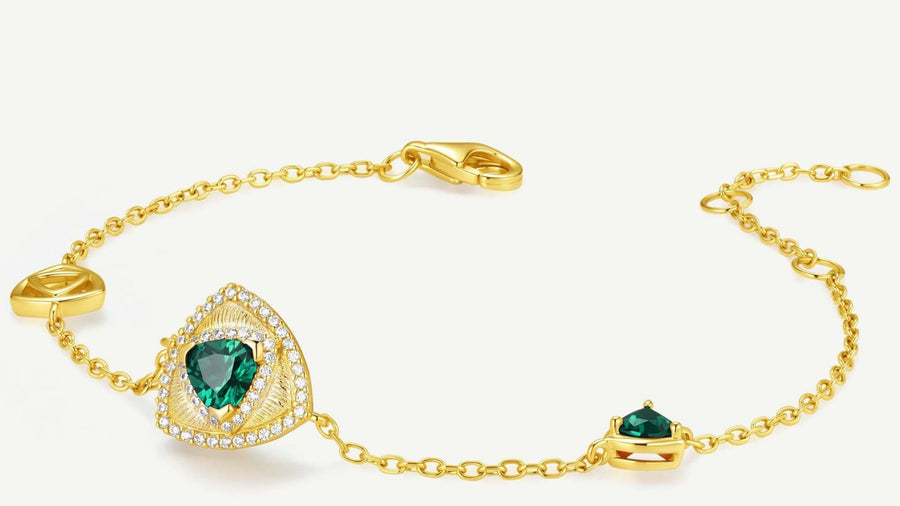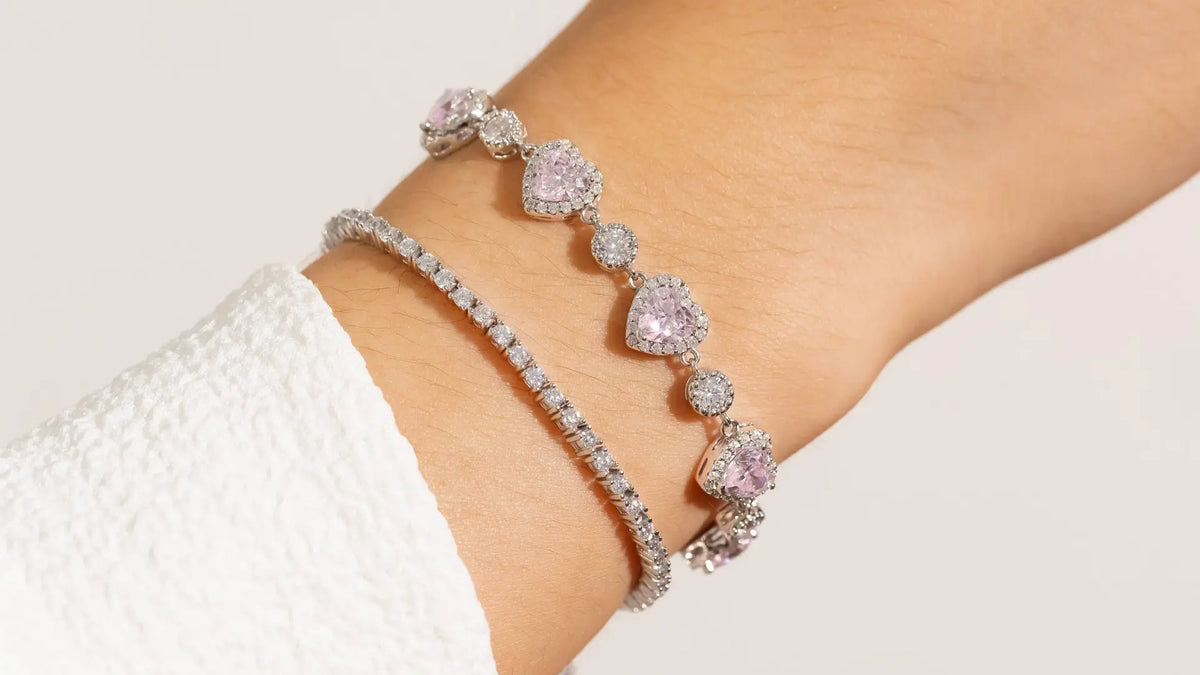
A silver birthstone bracelet is a 925 silver chain set with one or more stones tied to a birth month. The best ones balance three things: a stamped silver base, a chain that suits daily wear, and stones hard enough for a wrist that bumps into things. Get those right and the piece lasts.
Key Takeaways
The essentials at a glance:
- A 925 stamp means the chain is 92.5 percent silver mixed with a harder alloy, the standard for a sterling silver birthstone bracelet.
- Cable and box chains handle daily wear better than thin snake chains, and a lobster clasp holds more weight than a spring ring.
- Cool toned stones such as amethyst, aquamarine, and blue topaz sit naturally against silver, while softer stones need a bezel that covers their edges.
- Silver darkens when it meets sulfur and moisture, so a sealed pouch and a quick wipe after wearing keep the finish even.
Know What Sterling Silver Actually Means
Sterling silver is an alloy, not pure silver, and that is a good thing for a bracelet. The 925 stamp means 92.5 percent silver mixed with 7.5 percent of a harder metal, usually copper. Pure silver bends too easily to hold a stone setting, so the small share of alloy gives the chain the firmness it needs. When you shop, look for that stamp on the clasp or an inner link.
Some pieces add a thin rhodium finish on top of the silver to slow tarnish and brighten the surface. That layer is a coating, not solid metal, and it can wear thin at the points that rub most, such as the clasp and the underside of the links. Check the product page for the exact material if you want to know whether a finish is present. The sterling silver bracelet collection is a useful place to compare how different finishes look side by side.
If your skin reacts to jewelry, the alloy matters as much as the silver. Copper is the usual mixing metal, and a small number of people notice a green mark or mild irritation from it. A rhodium finish creates a barrier, but only while it stays intact. The sensitive skin metals guide walks through which metals tend to cause trouble and what to ask before buying.
Price follows the stone count, so a single simulated stone costs less than a row of natural gems. Compare both in the birthstone bracelets collection before you set a budget.

Pick a Chain Style That Suits Daily Wear
The chain style decides how much weight a bracelet carries and how often it needs repair. A wrist moves constantly, so a silver birthstone bracelet built on a fine chain tends to kink or snap at the clasp within a year. Cable and box links resist that stress better, while a snake chain feels smooth but creases if it bends sharply.
Clasp choice follows the same logic. A lobster claw closes with a spring and holds a multi stone piece more securely than a small spring ring, which can pull open under weight. If the bracelet carries five or six stones, ask whether the clasp is sized for that load. Extender chains are worth having too, since a half inch of slack lets the bracelet sit comfortably when a wrist swells in warm weather.
Length is the last part of the fit. Most women's bracelets sit at 7 inches, with 6.5 for a small wrist and 7.5 for a larger one. A row of stones needs a little clear space on each side, so a longer chain supports more stones without crowding. A jeweler can shorten a chain that runs long, but adding length later is harder, so it is wiser to buy with a little room to spare.
Charm styles offer a looser version of the same idea. Each stone hangs from its own small loop, so the count can grow with the family instead of being fixed at purchase. That flexibility is why charm bracelets suit anyone who expects to add stones over time, though the dangling pieces do catch on sleeves more often than a flat fixed row.
Match the Stone to the Silver Setting
Cool toned gems look most at home against silver, because the metal has a faint blue gray cast that flatters them. Amethyst, aquamarine, and blue topaz all read cleanly next to a bright silver chain. The GIA guide to birthstones lists the month options, and the GIA gemstone reference explains how hardness and color vary across them. Warm stones such as garnet or citrine can still work, but the contrast is sharper and more deliberate.
Hardness should guide the setting as much as color. The GIA guide to topaz and the GIA guide to aquamarine describe stones that tolerate daily knocks, so a prong setting that lifts them into the light is a reasonable choice. Softer stones need more cover. A bezel wraps a thin rim of metal around the edge and protects it from the desk, the steering wheel, and the sleeve that a bracelet meets every day.
Pearl and opal sit at the gentle end of the scale. The GIA guide to pearls covers how porous surfaces react to water and chemicals, which is why these stones do better in a bezel than an open prong. The GIA guide to amethyst is a useful contrast for a stone that handles a bracelet with less fuss. If a row mixes stone types, set the care routine by the softest one, because that single stone decides how the whole piece ages.
Simulated stones are worth considering when a row needs many colors on a modest budget. They keep the look consistent across months, which helps a family bracelet read as one design. The trade off is that they scratch and age differently from natural gems, so the whole piece should be treated as gently as its most delicate stone.

Care and Tarnish Prevention for Silver
Silver darkens over time, and that is a surface reaction rather than damage. Sulfur in the air, sweat, lotions, and moisture form a thin layer of tarnish that dulls the shine. The good news is that the layer sits on top and wipes away, so a bracelet can look new again with a soft cloth and a little patience. Regular wear actually slows the process, since the friction of a sleeve keeps the surface lightly polished.
Storage matters more than any cleaner. Keep the bracelet in a sealed pouch or a lined box with an anti tarnish strip, and keep each piece in its own compartment so chains do not scratch stones. The 925 silver tarnish care guide goes into the everyday habits that keep the finish even. Avoid leaving jewelry in a bathroom, where steam and spray linger long after a shower.
Clean gently and match the method to the stone. A mild soap, lukewarm water, and a soft cloth handle most silver, but ultrasonic machines and dips can loosen settings or harm porous gems. The birthstone jewelry cleaning guide covers which stones tolerate soaking and which should only be wiped. Put the bracelet on after makeup and perfume, take it off before swimming, and a sterling silver birthstone bracelet will keep its color for years.
Frequently Asked Questions About Sterling Silver Birthstone Bracelets
Q1: What does the 925 stamp on a silver bracelet mean?
It means the metal is 92.5 percent silver and 7.5 percent of another metal, usually copper. Pure silver is too soft to hold a stone setting on its own, so the alloy adds firmness. Look for the stamp on the clasp or an inner link, and treat it as the baseline for a genuine sterling piece.
Q2: Will a sterling silver birthstone bracelet turn my skin green?
It can, though most people never notice it. The copper in the alloy can react with sweat and leave a faint green mark that washes off. A rhodium finish blocks that contact while it lasts. Wiping the bracelet dry after wear and keeping it out of the bathroom usually solves it.
Q3: Can I shower or swim wearing a silver birthstone bracelet?
It is better to take it off. Water itself does little harm to silver, but soap, chlorine, and salt leave residue that speeds up tarnish and can dull soft stones. Perfume and lotion are worse than plain water. Make the bracelet the last thing you put on and the first thing you take off.
Q4: Is silver or gold better for a birthstone bracelet?
Neither is better outright, since the choice is about color and upkeep. Silver flatters cool stones such as amethyst and aquamarine and costs less, but it needs occasional polishing. Gold tones suit warm stones and resist tarnish. Check the product page for the exact material, since gold tone pieces are often a plated finish.
Q5: How do I clean a silver bracelet without harming the stones?
Use lukewarm water, a drop of mild soap, and a soft cloth, then dry it fully before storing. Skip ultrasonic machines and liquid dips when the bracelet holds pearl, opal, or other porous stones. For anything beyond light surface dirt, a gentle wipe repeated over time is safer than one aggressive scrub.