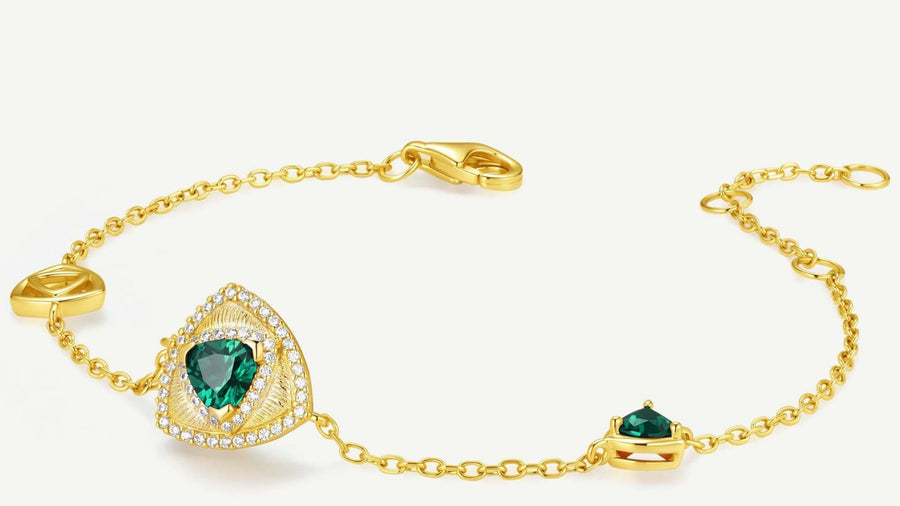
Grandmother birthstone jewelry works best as a coordinated family set, where a necklace, bracelet, and ring share one small group of stones. Repeating the same months keeps the story consistent, and she can wear a single piece or the whole set.
Key Takeaways
The essentials at a glance:
- A family set repeats one shared group of birthstones across several pieces.
- Give each piece a role, so the necklace, bracelet, and ring do not compete.
- Use the same metal tone and the same month order across the whole set.
- Coordinated does not mean identical, so vary the shape and stone size.
- Build the set over time, starting with the piece she will wear most.
Start With One Shared Set of Stones
A family set begins with a fixed list of birthstones that every piece draws from, rather than a fresh selection for each item. That single decision is what turns separate gifts into one coherent group.
Pick the stones once, for the people the set represents, then reuse that same group everywhere. If the family has four birth months, those four colors become the palette for the necklace, the bracelet, and the ring. Repeating them is what makes separate pieces read as one set.
A grandparent birthstone jewelry set often starts this way because a couple shares one family tree. The list stays stable even as pieces are added years later, which is the difference between a set and a pile of unrelated gifts. The birthstone jewelry gift guide explains how a single stone choice can anchor a whole group of pieces.
Write the list down with names and months. The GIA guide to birthstones lists the traditional stone for each month, and the GIA April birthstones page shows that a single month can carry more than one accepted option. A written record stops the palette from drifting as new pieces arrive.
Keep the group small. Five or six stones is enough to carry a family story across several pieces, and a short list stays legible on a ring or a pair of earrings. A long list forces tiny stones, and tiny stones lose their color at a glance.

Give Every Piece a Different Job
Once the stones are fixed, assign each piece a role so the set does not repeat the same information four times. Each item should answer a slightly different question about the family.
The necklace can carry the full family row, since a chain has the most room. A bracelet works well for the grandchildren alone, a ring suits one focal stone, and earrings make a quiet echo of the palette. Dividing the story this way keeps every piece worth wearing on its own.
The grandma jewelry collection groups pieces that are meant to work together, which is a useful starting point when you want the metals and stone sizes to line up. The birthstone bracelet options show how a smaller surface handles a short row of stones.
A ring with a single stone gives the set a focal point without competing with the necklace. The birthstone ring designs collection covers the single stone formats, and the ring and bracelet stacking guide explains how to wear more than one piece on the same hand without crowding it.
Assigning roles also solves a common problem. When every piece carries all the stones, the set looks like the same design shrunk four times, and the necklace loses its place as the piece that tells the whole story.
Keep the Metal and the Order Consistent
Two quiet decisions hold a family set together, one metal tone and one month order used across every piece. Neither is flashy, but both are obvious the moment they are missing.
Choose one metal tone for the set. Mixing a warm finish on the necklace with a cool one on the ring makes the pieces look like separate purchases, even when the stones match. Check the product page for the exact material on each item, since finishes vary and a gold look can come from a plated surface rather than solid metal.
Use the same order everywhere. If the necklace runs from January onward, the bracelet should too, so the colors line up when the pieces are worn together. The birthstone color and meaning guide is a handy reference for keeping months and their stones in a stable sequence.
Different pieces also wear differently. A ring takes more knocks than a pendant, so a softer stone may belong in the necklace rather than on the hand. The GIA gemstone reference explains why hardness varies across stones, and the GIA guide to garnet covers a moderately hard option that suits a piece worn every day.
Consistency is about the palette and the order, not the silhouette. Vary the stone cut, the setting, and the size between pieces. A round stone on the necklace and an oval one on the ring still read as a set because the colors and the sequence match.

Build the Set Over Several Occasions
A family set does not have to arrive all at once, and buying it piece by piece usually produces a better result. Slow building also gives each gift its own moment.
Start with the piece she will reach for most, which is usually the necklace. Add the bracelet the following year, then the ring or earrings as milestones come up. Spreading the purchase across birthdays and holidays gives each piece its own occasion instead of one large anonymous gift.
Grandmother birthstone jewelry grows well this way because the shared stone list was fixed at the start. A new piece slots into the same palette without rethinking the whole set. The personalized gift ideas page is a useful stop when a later piece carries an engraved name, and the birthstone earrings collection shows how a small final piece can complete the group.
Think about how the set is actually worn. She may put on all the pieces for a family dinner and just the necklace for a weekday, so each item has to stand on its own. The birthstone jewelry cleaning guide covers the at home routine for mixed pieces, and storing each item separately keeps harder stones from scratching softer ones.
A set built slowly also lets you correct course. If a stone proves too delicate for a ring, the next piece can carry it in a protected bezel instead. The GIA guide to aquamarine and the GIA guide to rubies are useful references for comparing how two common birthstones handle daily wear. Over time the group becomes a record of the family, one considered piece at a time.
Frequently Asked Questions About Grandmother Birthstone Jewelry
Q1: What makes birthstone pieces a family set?
A set repeats one fixed group of stones across several pieces, uses the same metal tone, and keeps the same month order. The pieces coordinate without being identical. A necklace, bracelet, and ring that share a palette read as one group even when their shapes differ.
Q2: Should every piece carry all the family stones?
No. It is better to give each piece a role. Let the necklace hold the full family row, the bracelet the grandchildren, and the ring a single focal stone. The charm necklace designs collection shows how one piece can carry a growing group on its own.
Q3: Do the metals need to match across the set?
Yes, at least in tone. A warm finish on one piece and a cool finish on another makes them look like unrelated purchases. Check each product page for the exact material, since a gold look can come from a plated surface rather than solid metal.
Q4: Which piece should I buy first?
Start with the necklace, since most grandmothers wear it most often and it has the most room for stones. Add a bracelet, then a ring or earrings as later occasions arrive. The birthstone necklace collection is a reasonable place to begin.
Q5: How do I care for a mixed set of stones?
Clean each piece based on its softest stone, and store the items separately so harder pieces cannot scratch delicate ones. Rings need more frequent checks than pendants because they take more knocks. A soft cloth and mild soap handle most metals without special equipment.