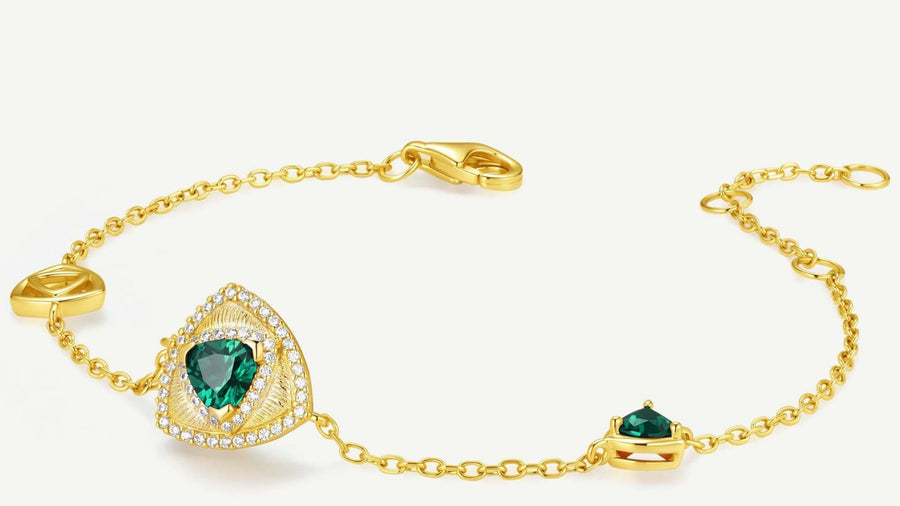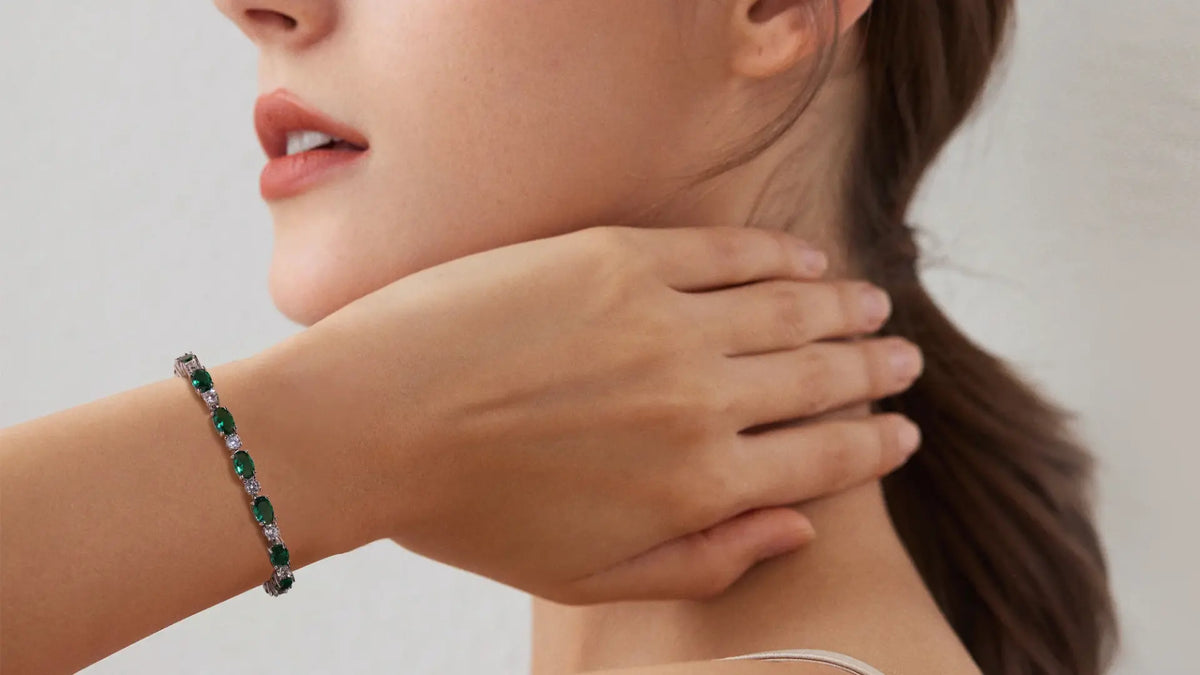
The best tennis bracelet is the one whose setting, metal, and fit match how often you will wear it. A continuous line of stones looks simple, but small choices decide whether it lasts. Judge the clasp, the stone height, and the wrist length before the sparkle.
Key Takeaways
The essentials at a glance:
- A tennis bracelet is a continuous line of matched stones, so the setting and clasp carry the real work.
- A secure clasp with a safety latch matters more than stone size on a piece worn every day.
- Sterling silver costs less and cleans easily, while gold toned finishes need a check of the exact material.
- Colored stones sit at different hardness levels, and the softest one sets the care routine for the whole bracelet.
Start With the Setting
The setting is what keeps a continuous line of stones aligned and on your wrist. More than the metal or the stone count, it decides how the bracelet behaves after a year of regular wear.
A tennis bracelet is built from many small links joined end to end, each holding a matched stone, so the whole row bends with the wrist. That flexible construction is the point: a rigid bangle reads as a different piece entirely. The name comes from a match in the 1980s, when a player stopped play to retrieve a broken diamond line bracelet, and the label stuck. The tennis bracelet everyday looks guide shows how the same line sits with casual outfits, and the full tennis collection gathers the settings in one place.
Three settings dominate. A prong setting lifts each stone so light reaches it from every side, which gives the classic bright line but leaves tiny tips that can catch on a cuff. A bezel setting wraps a thin rim of metal around each stone, trading a little sparkle for a smoother edge that resists knocks. A channel setting seats the stones inside a groove, so almost nothing protrudes. For a piece meant to be worn often, bezel and channel designs tend to look better after a few years, while prongs suit occasional wear.

Pick the Metal That Suits Daily Wear
Metal choice is mostly a trade off between cost, color, and upkeep. A sterling tennis bracelet is the practical entry point: bright, affordable, and easy to polish back to a clean finish.
Sterling silver does tarnish, which is a normal reaction to air and moisture rather than a flaw. A quick wipe with a soft cloth keeps it presentable, and storing it dry slows the process. Some bracelets carry a surface treatment that resists tarnish longer, so check the product page for the exact material and finish before you buy. Warmer gold toned looks may be a plated layer over another metal, and a plated surface can thin at the spots that rub most. If the exact metal matters to you, the product page is the place to confirm it rather than the photo.
Skin sensitivity belongs in the same decision, since a bracelet rests against the wrist all day. The sensitive skin jewelry metals guide walks through which metals tend to cause irritation, and the sterling silver tarnish guide covers the cleaning routine in more detail. You can compare the silver tennis jewelry options once you know which finish your skin accepts. A metal that suits you beats a metal that only looks right in a box.
Modern Shapes and Colored Stones
A modern tennis bracelet keeps the continuous line but loosens the old all diamond rule. Contemporary versions change the stone color, the setting height, or the spacing, and the result still reads as a tennis bracelet.
Color is the biggest shift. Instead of a single white line, a bracelet may alternate two hues, graduate the stone sizes toward the center, or set every stone in a bezel for a smoother profile. Some designs mix a few colored stones into a white line, which gives a personal touch without abandoning the classic shape. The colored gemstone collection is a useful starting point if you want to see which hues are available, and the tennis necklace collection shows how the same line works at a longer length.
Hardness changes the calculus, because a bracelet takes more knocks than a pendant. The GIA gemstone reference explains the scale that predicts how a stone handles daily wear. The classic line uses diamond, and the GIA guide to diamonds covers why it sits at the top. Sapphire is a hard colored choice, and the GIA guide to sapphires explains its place near the top of the scale. Aquamarine and amethyst sit lower, so the GIA guide to aquamarine and the GIA guide to amethyst are worth reading before you pair them with an open prong line. Opal is softer still, and the GIA guide to opal notes the extra care it needs. Let the softest stone in the row set the care routine for the whole bracelet.

Fit, Clasp and Long Term Care
Fit and the clasp decide whether a bracelet gets worn or sits in a drawer. A line that is too tight pulls at the links, and one that is too loose swings into everything on a desk.
Measure the wrist and add roughly half an inch to an inch for comfortable drape. The exact allowance depends on how the links sit: a bezel line feels a little thicker than a prong line, so it often wants a touch more room. Most tennis bracelets use a box clasp with a folding safety latch, which is the dependable option for daily wear. A lobster clasp is simple but offers less backup, and a plain hook is best kept for occasional pieces. If a clasp has a safety chain or a double latch, that small detail is worth having.
Care is habit more than effort. Take the bracelet off before lifting, gardening, or contact sports, wipe off lotion and soap residue, and let it dry before it goes into a soft pouch. Lay it flat or hang it so the line does not kink. The cubic zirconia vs natural diamonds guide compares how different stone materials hold their polish, which helps if your line mixes materials. The layering necklaces with chains guide has ideas for pairing a tennis line with other pieces once you are comfortable wearing it. Small consistent habits are what keep one bracelet in rotation for years.
Frequently Asked Questions About Tennis Bracelets
Q1: Why is it called a tennis bracelet?
The name comes from a match in the 1980s when a player paused play to retrieve a broken diamond line bracelet. Before that, the style was simply called a line bracelet. The label stuck and now describes any continuous row of matched stones.
Q2: Can I wear a tennis bracelet every day?
Yes, if the setting and clasp suit constant wear. A low profile bezel or channel line with a safety latch handles daily use well. Take it off for heavy work and sports, and wipe off residue so the finish stays even.
Q3: What is the best metal for a tennis bracelet?
Sterling silver is affordable and cleans easily, though it tarnishes over time. Gold toned finishes may be plated, so check the product page for the exact material. Pick the metal your skin tolerates, since the bracelet rests on the wrist all day.
Q4: How should a tennis bracelet fit?
Measure the wrist and add roughly half an inch to an inch for drape. The bracelet should move a little but not spin freely or pull at the links. A thicker bezel line usually wants slightly more room than a slim prong line.
Q5: Are colored stone tennis bracelets durable?
They can be, but hardness varies. Diamond and sapphire resist scratches, amethyst and aquamarine sit lower, and opal needs gentler care. Choose a protective setting for softer stones and base the cleaning routine on the most delicate one in the row.