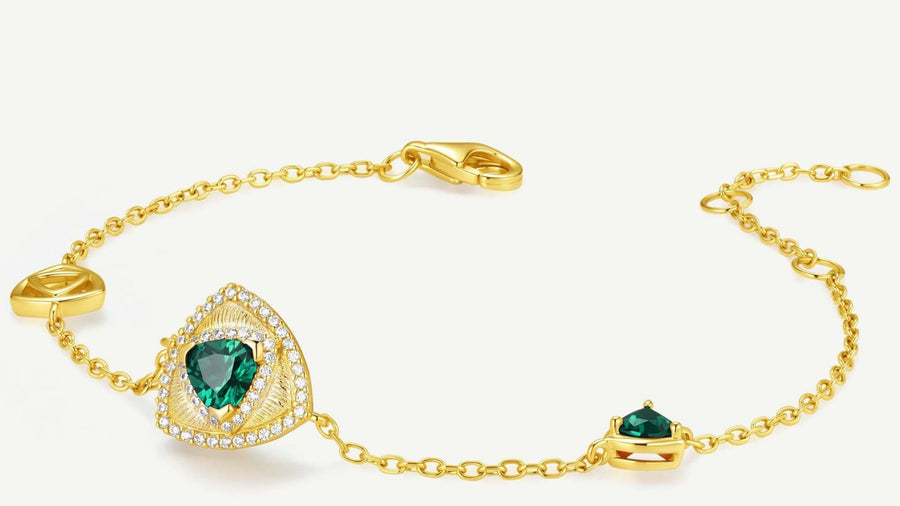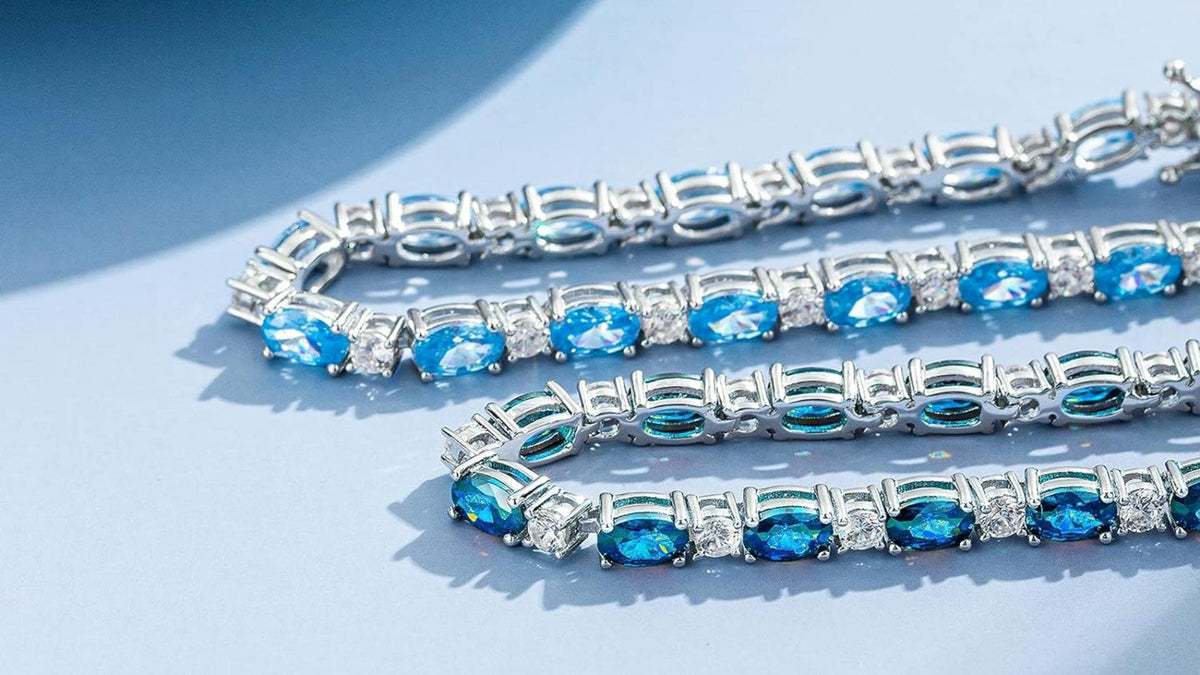
A sapphire tennis necklace reads crisp and formal in deep blue, while an amethyst tennis necklace brings a softer purple to daily wear. Color depth and hardness set them apart.
Key Takeaways
The essentials at a glance:
- Sapphire gives a deep, even blue, while amethyst ranges from pale lilac to rich violet.
- Sapphire is the harder gem, so it is the safer pick for a necklace worn most days.
- A matched row matters more with amethyst, since quartz often shows color zoning from stone to stone.
- Deep blue leans formal against tailored clothes, and purple reads softer with denim and knits.
- Check the product page for the exact material before choosing a metal finish for daily wear.
Read the Color Difference First
Sapphire and amethyst sit at opposite ends of the cool color range, and that gap is the clearest reason to choose one over the other. Sapphire gives a deep, saturated blue that can run from bright cornflower to almost navy, and it keeps that depth even in dim light. Amethyst ranges from pale lilac to a rich violet, often with lighter and darker zones inside a single stone. On a tennis necklace, where dozens of gems sit in one line, that difference decides whether the row reads as a single dark ribbon or a softer, shifting band of purple.
Uniformity is the practical part of the color question. A row of sapphires is usually matched for a consistent blue, so the necklace reads as one deliberate line from clasp to clasp. Amethyst is harder to match exactly, because quartz often shows color zoning, and a mixed row can look uneven rather than playful. The GIA guide to sapphires covers why blue corundum holds such an even tone, and the GIA guide to amethyst explains the purple quartz range. If a tidy, matched line is the goal, sapphire asks less of the person setting the stones.
Birth month can settle the choice when both colors appeal. Sapphire belongs to the GIA September birthstones list, while amethyst appears among the GIA February birthstones options, so either row can quietly mark a date. The GIA guide to birthstones lays out the full month by month chart, which helps if you plan to build a matching ring or bracelet around the same gem. The birthstone color symbol guide adds the meaning attached to each stone, useful when the necklace is a gift rather than a purchase for yourself.

Match Hardness to How Often You Wear It
Sapphire is the harder stone, so it is the safer pick for a necklace you plan to wear most days. It sits near the top of the Mohs scale, which means it keeps a clean polish through the small rubs that come with regular wear. Amethyst is a little softer, so it can pick up fine scratches over time if it is worn constantly and stored loosely with other pieces. A necklace takes fewer knocks than a bracelet, but a row of many small stones still deserves a gem that tolerates a busy week.
The GIA gemstone reference explains why hardness and structure matter for pieces built from repeated small stones, and the difference between these two gems is large enough to shape the care routine. Sapphire handles a gentle clean and daily wear without much fuss. Amethyst does well with the same care, but it pays to keep it away from harder gems in a jewelry box, since a harder neighbor can leave a mark on the softer surface. Neither stone is fragile, yet the harder one gives you more room to be casual about the piece.
How often you wear it is the real question, not which stone is better in the abstract. A necklace for work, travel, and weekends argues for sapphire. A necklace for dinners, events, and days when you can be a little careful can justify amethyst and its softer surface. The tennis necklace collection shows the linked structure in both tones, and the full tennis collection lets you compare the same row in other gems before you settle. Decide on the wearing schedule first, and the hardness question usually answers itself.
Pair the Row With Outfits and Necklines
Deep blue reads formal and amethyst reads relaxed, so start with the clothes the necklace will actually sit against. A sapphire row sharpens a plain black dress, a white shirt, or a tailored collar, and it holds its own against cool grays and navies. An amethyst row softens denim, knits, and warm neutrals, and its lighter tones suit daytime outfits where a dark blue can feel too heavy. Neither color is limited to one setting, but each has a natural range where it looks effortless rather than chosen for the occasion.
Length changes the pairing as well. A shorter row sits close to the throat and suits open collars, while a longer drop leaves room for a second, shorter pendant above it. The necklace chain length guide covers where the standard lengths fall on different necklines, and the layer necklaces with chains article shows how to space two pieces so they stay distinct. If you want to add a small pendant, keep it quiet and let the colored row lead, since a busy charm next to a full gemstone line competes for attention.
Metal tone is the last part of the outfit decision. A cool finish keeps sapphire crisp, while a warm finish brings out the red notes in a violet amethyst. You can browse the gemstone jewelry range to see how each color reads across different pieces, or visit the birthstone necklace collection for a single stone version of the same idea. Rather than guess at karats, check the product page for the exact material, because gold colored and silver colored rows are built differently and sit a little differently against the skin.

Choose Setting, Metal, and Care
A tennis necklace repeats one small setting across the whole row, so the setting and metal matter as much as the gem. Prong settings lift each stone and let light reach it, which suits sapphire and shows off its depth. Bezel settings wrap a thin rim of metal around the edge and give a softer stone like amethyst a little more protection from knocks. Neither is wrong, but a row with exposed edges asks more of a softer gem over a long wearing life.
Skin sensitivity deserves a quick check before you commit, because a tennis row puts a long stretch of metal against the neck. The sensitive skin metals check walks through the common finishes, and the silver tennis jewelry collection is a useful place to see one tone carried across a full linked row. If the piece will be worn daily, a finish that suits your skin matters more than a small difference in shine. Cleaning follows the stone, and the birthstone cleaning at home guide explains how to clear a linked row without soaking a delicate setting.
Storage is simple but worth doing well. Fasten the clasp and lay the necklace flat so the links do not kink, and keep amethyst away from harder gems in the same box. A row that lies flat keeps its even line, which is the whole point of a tennis setting. Whichever color you choose, a matched line of gemstones is a flexible piece, because it reads as jewelry first and birthstone second, so it fits a birthday, an anniversary, or a personal milestone without needing a long explanation.
Frequently Asked Questions About Tennis Necklace Colors
Q1: Is sapphire or amethyst better for a tennis necklace worn every day?
Sapphire is the better everyday pick. It is harder, keeps its polish through regular wear, and holds an even deep blue that reads well in most light. Amethyst suits occasional wear and rewards a little extra care, and its softer purple is a lovely choice when the necklace is not on every single day.
Q2: Do sapphire and amethyst tennis necklaces come in different shades?
Yes, both cover a range. Sapphire runs from bright cornflower blue to a deep navy, while amethyst moves from pale lilac to rich violet, often with color zoning inside one stone. Look for a row that is matched across its length, since an even color is what makes a tennis line look deliberate.
Q3: Which color suits more outfits?
It depends on what you wear most. Sapphire sharpens tailored pieces, black, white, and cool grays, so it leans formal. Amethyst softens denim, knits, and warm neutrals, so it leans casual and daytime. Pick the tone that matches the clothes you reach for most often rather than the one that looks best in a photo.
Q4: Can I layer a colored tennis necklace with other pieces?
You can, and it works best when the other pieces stay quiet. Leave room above the row for one shorter pendant, and keep that pendant simple so the gemstone line leads. The layer necklaces with chains article shows how to space pieces so they do not tangle during the day.
Q5: How should I clean and store a tennis necklace?
Use a soft cloth and mild soap, and avoid soaking a delicate setting for long. Fasten the clasp and store the row flat so the links keep their even line, and keep a softer amethyst row away from harder gems in the same box. The birthstone cleaning at home guide covers a linked row in more detail.